September 21, 2026

BENTONVILLE, Ark. Sept. 24, 2026 – As approximately 60 million Americans living in rural areas face a widening 39% higher patient burden per primary care physician and accelerating rates of preventable deaths, Heartland Whole Health Institute today announced the launch of Heartland Whole Health Connect, a pioneering initiative designed to create a replicable, nationwide blueprint for rural health care transformation.
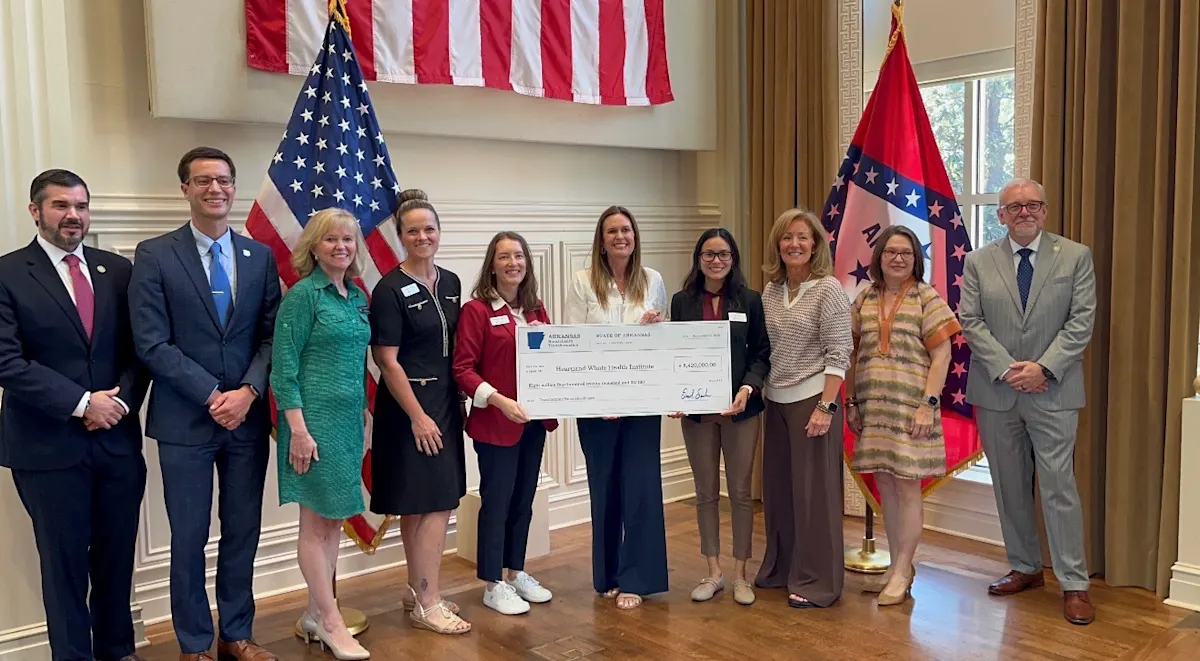
Heartland Whole Health Connect brings together six regional health care organizations and is supported by $8.4 million in first-year funding through Arkansas’ Rural Health Transformation Program (RHTP), a state-administered program established by the Centers for Medicare & Medicaid Services (CMS) to modernize rural care delivery and stabilize community health networks. The Institute, founded by philanthropist Alice Walton, to transform traditional health care into a whole-person approach focused on physical, mental, emotional, and social well-being, serves as the central convener driving this multi-system collaboration.
Across the United States, rural residents face disproportionate health risks, including higher rates of heart disease, stroke, and diabetes, compounded by severe shortages of primary care providers. In Arkansas, which ranks 48ᵗʰ out of 50 states for overall health, nearly 62% of adults live with chronic conditions.
To address these systemic barriers to care, Heartland Whole Health Connect is bringing together health systems, Federally Qualified Health Centers (FQHC), and a community pharmacy network to expand access across 28 rural counties from Northwest to Northeast Arkansas starting in September. Together, these six participating organizations serve approximately one million residents, representing nearly one in three Arkansans:
Mercy: Regional fully integrated health system leveraging expansive virtual care infrastructure.
Community Clinic: A community health system delivering accessible primary care with integrated dental and behavioral health services to communities across Arkansas and rural Oklahoma.
Boston Mountain Rural Health Center: FQHC delivering essential primary care across mountain and rural communities.
North Arkansas Regional Medical Center: A nonprofit health care system dedicated to providing comprehensive hospital, primary, specialty, and obstetrical care for patients across North Central Arkansas.
St. Bernards Healthcare: An independent, nonprofit, Catholic healthcare system serving 23 counties in Northeast Arkansas and Southeast Missouri.
Arkansas Community Pharmacy Enhanced Services Network: Network of clinically integrated community pharmacies providing enhanced medication management and local care coordination.
“With rural mortality increasing nationwide and chronic disease taking an unsustainable human and economic toll, we cannot rely on the reactive, volume-based health models of the past,” said Claude Pirtle, MD, MBA, President of Heartland Whole Health Institute. “Lasting health is shaped by what happens between medical appointments, not just during them. Heartland Whole Health Connect establishes a scalable, value-based framework that empowers local care teams with technology, whole-health training, and resources to address the factors that influence health while expanding access to care in rural communities. Ultimately, this will help Arkansans achieve better health through more coordinated, whole-person care delivered closer to home.”
Heartland Whole Health Connect helps providers extend clinical care beyond appointments through remote patient monitoring, telehealth, integrated behavioral health services, pharmacy-based interventions, and care coordination. Participating care teams will also receive specialized training through Whole Health Curriculum, which equips providers with a person-centered framework to address the physical, mental, emotional, and social factors, such as nutrition, sleep, and physical activity, that influence health as part of whole-person care.
For example, a patient managing diabetes in rural Arkansas may be able to check in with their care team through virtual visits, work with their local pharmacist to better manage medications, and receive support managing their condition between office visits. These services can help improve health outcomes, reduce barriers to care, and reduce avoidable emergency department visits.
“Primary care is one of the most effective levers for improving health outcomes,” said Angela Lappin, MBA, BSN, RN, Vice President, Chief of Value‑Based Initiatives at Heartland Whole Health Institute. “By investing in the people, technology, and care models that help patients manage their health continuously, we have an opportunity to improve lives, strengthen communities, and build a more sustainable model for the entire country.”
RHTP funding will be distributed to participating health care organizations to expand workforce capacity, strengthen care delivery capabilities and chronic disease management services and deploy digital health platforms like telehealth and remote patient monitoring.
To establish evidence-based outcomes, Heartland Whole Health Connect will track rigorous metrics over a five-year initiative that include: targeting at least 48,000 patients newly engaged in proactive chronic disease management and preventive screening programs; a ≥30% increase in telehealth and remote care utilization across participating rural counties; more than 250 health care providers trained in the Whole Health Curriculum; and measurable improvements in HbA1c control (<9%) for diabetes and blood pressure control (<140/90) for hypertension.
Heartland Whole Health Institute serves as the convener and coordinating organization for Heartland Whole Health Connect and brought together the group of six organizations to collaborate on this rural health initiative. While participating providers deliver care in their communities, the Institute will collect standardized clinical and operational data via monthly dashboards, publishing transparent, five-year research findings aimed at delivering a proven blueprint for states across the Heartland and the nation.