


Building a Stronger Physician Workforce for Arkansas
Heartland Whole Health Institute is committed to transforming health care delivery in the Heartland and that includes ensuring a strong physician workforce. To advance this goal, we partnered with the University of North Carolina’s Sheps Center to analyze Arkansas’ Graduate Medical Education (GME) landscape. This work will outline opportunities to expand GME programs statewide — paving the way for better access to care and improved health outcomes.
Why This Matters
Arkansas faces a critical challenge: ensuring access to quality health care for every community, especially in rural and underserved areas. While the state has made strides in primary care training, we continue to rank last among peer states in GME slots for key specialties like Obstetrics & Gynecology and General Surgery. These gaps have real consequences — impacting maternal health, behavioral health, and specialty care across the state.
Why We Undertook This Work
At Heartland Whole Health Institute, we believe solving systemic health care challenges requires collaboration and data-driven strategies. Expanding GME programs is essential to building a sustainable physician workforce. Without investment in residency training, Arkansas cannot meet growing demand for physicians or address persistent health disparities.
Our study set out to:
- Identify barriers to GME expansion, such as funding limitations and rural capacity.
- Highlight gaps in behavioral health, maternal health, and specialty care.
- Lay the groundwork for a coordinated statewide strategy to strengthen physician training.
Early Findings
The data is clear:
- Arkansas ranks last among peers in OB/GYN and General Surgery training slots.
- 97% of Arkansas counties are designated behavioral health shortage areas.
- Rural areas face severe workforce gaps, with only 30% of residency graduates practicing in underserved regions.
These findings underscore the urgency of expanding residency positions in critical specialties and creating pathways for physicians to serve rural communities.
Collaboration Is Key
This work is only possible through strong partnerships. To ensure our data analysis reflects the realities and needs of communities across Arkansas, we engaged more than 30 stakeholders with deep subject‑matter expertise from all five regions of the state.
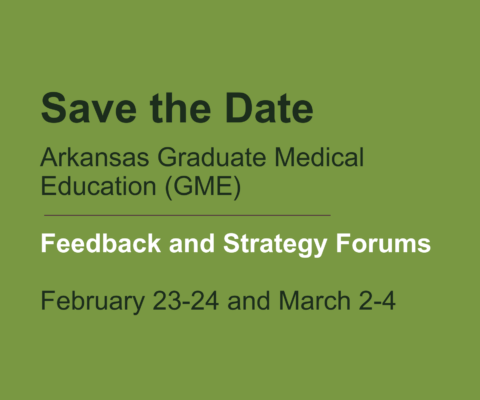
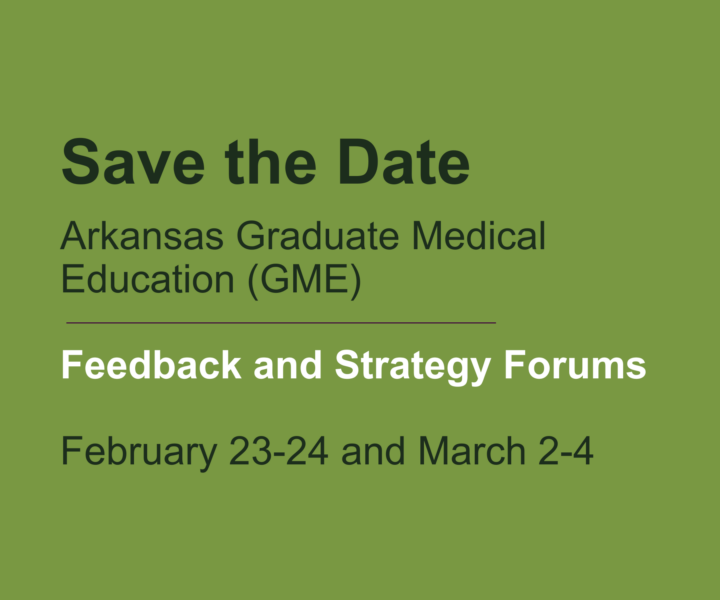
Please continue engaging with us as we refine recommendations by registering for one of our upcoming regional forums near you.
Follow this link to register: Qualtrics Survey | Qualtrics Experience Management
Over the next several weeks we will be traveling to different areas of the state to gather additional insights and perspectives.
Once we gather your feedback in the forums, we will present a final menu of options to state leaders, followed by making the information publicly accessible on our website.
Your continued collaboration is essential as we build a menu of options that state leaders can use to remove barriers, align resources, and shape solutions that will strengthen Arkansas’ health care system for years to come. With your partnership we can achieve our mutual goal to improve access, lower costs, and increase the quality of care in Arkansas and beyond.
For more information or to register, contact Sam Culpepper.